

Hubble Telescope Artwork
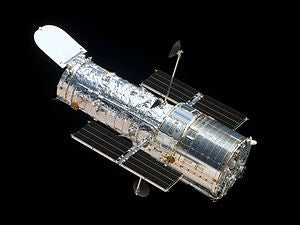
The Hubble Space Telescope (HST) is a space telescope that was launched into low Earth orbit in 1990 and remains in operation. Although not the first space telescope, Hubble is one of the largest and most versatile, and is well known as both a vital research tool and a public relations boon for astronomy.
The HST is named after the astronomer Edwin Hubble, and is one of NASA's Great Observatories, along with the Compton Gamma Ray Observatory, the Chandra X-ray Observatory, and the Spitzer Space Telescope.
Hubble has recorded some of the most detailed visible light images ever, allowing a deep view into space and time. Many Hubble observations have led to breakthroughs in astrophysics, such as accurately determining the rate of expansion of the universe.
The telescope is operating as of 2017, and could last until 2030–2040. Its scientific successor, the James Webb Space Telescope (JWST), is scheduled for launch in 2018.
-
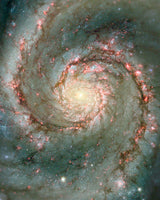 The Heart of the Whirlpool Galaxy by Hubble Telescope
from $65.00
The Heart of the Whirlpool Galaxy by Hubble Telescope
from $65.00
-
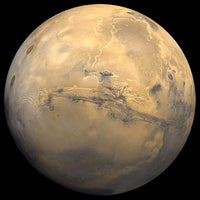 Mars by Hubble Telescope
$80.00
Mars by Hubble Telescope
$80.00
-
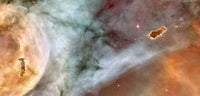 Carina Nebula The Caterpillar by Hubble Telescope
from $60.00
Carina Nebula The Caterpillar by Hubble Telescope
from $60.00
-
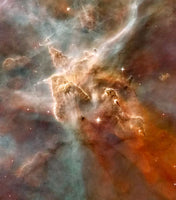 Star-Forming Region of Carina Nebula by Hubble Telescope
from $90.00
Star-Forming Region of Carina Nebula by Hubble Telescope
from $90.00
-
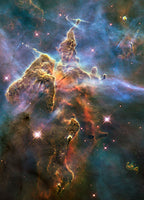 Visible View of Pillar and Jets by Hubble Telescope
from $65.00
Visible View of Pillar and Jets by Hubble Telescope
from $65.00
-
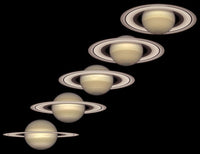 Saturn From 1996 to 2000 by Hubble Telescope
$105.00
Saturn From 1996 to 2000 by Hubble Telescope
$105.00
-
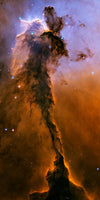 The Eagle Has Risen Stellar Spire by Hubble Telescope
from $60.00
The Eagle Has Risen Stellar Spire by Hubble Telescope
from $60.00
-
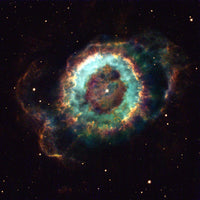 Old Star Gives Up the Ghost by Hubble Telescope
from $40.00
Old Star Gives Up the Ghost by Hubble Telescope
from $40.00
-
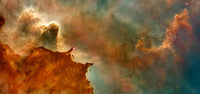 Carina Nebula Details Great Clouds by Hubble Telescope
from $40.00
Carina Nebula Details Great Clouds by Hubble Telescope
from $40.00
-
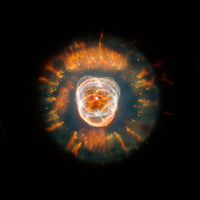 The Eskimo Nebula by Hubble Telescope
$55.00
The Eskimo Nebula by Hubble Telescope
$55.00
-
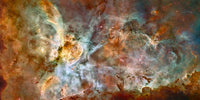 The Carina Nebula Star Birth by Hubble Telescope
from $55.00
The Carina Nebula Star Birth by Hubble Telescope
from $55.00
-
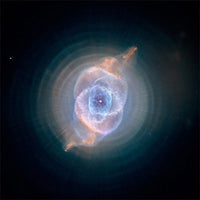 Cat's Eye Nebula Dying Star by Hubble Telescope
$65.00
Cat's Eye Nebula Dying Star by Hubble Telescope
$65.00
-
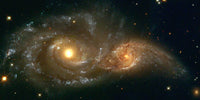 Interacting Spiral Galaxies by Hubble Telescope
from $40.00
Interacting Spiral Galaxies by Hubble Telescope
from $40.00
-
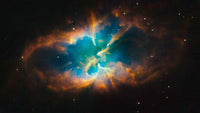 Splendid Planetary Nebula by Hubble Telescope
from $40.00
Splendid Planetary Nebula by Hubble Telescope
from $40.00
-
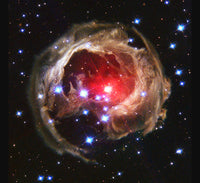 Light Echo Dust Around Super Giant by Hubble Telescope
from $40.00
Light Echo Dust Around Super Giant by Hubble Telescope
from $40.00
-
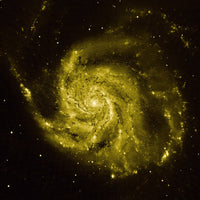 Composite Image Hubble Data by Hubble Telescope
from $40.00
Composite Image Hubble Data by Hubble Telescope
from $40.00
-
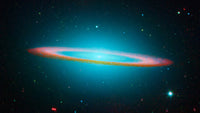 The Sombrero Galaxy Infared by Hubble Telescope
from $40.00
The Sombrero Galaxy Infared by Hubble Telescope
from $40.00
-
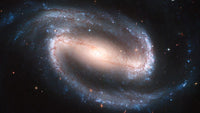 Barred Spiral Galaxy by Hubble Telescope
from $40.00
Barred Spiral Galaxy by Hubble Telescope
from $40.00

















